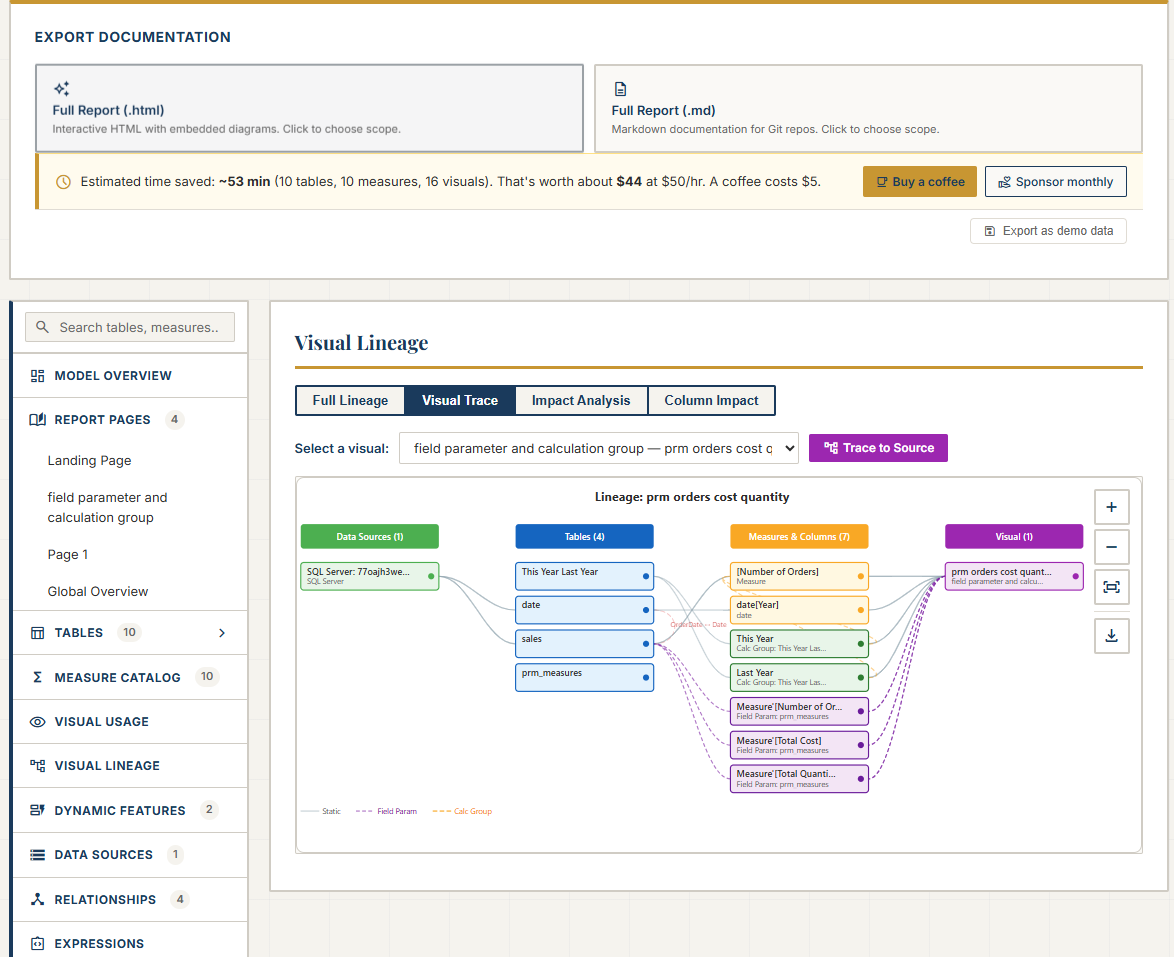
Generates documentation from Power BI semantic models. Reads PBIP/TMDL files and pulls every measure, table, relationship, and metadata entry into readable output. Used by enterprise teams managing 100+ semantic models.
Power BI & Microsoft Fabric Architect · AI-Ready Semantic Layers · Supply Chain
I architect, build, and look after IKEA's enterprise analytics on Microsoft Fabric and Power BI: 30,000+ supply chain users, billions of rows. Copilot and AI agents answer from these models, so I keep them governed, documented, and source-controlled. Microsoft MVP since 2022. On the side I build the open-source PBIR/TMDL tools that other Power BI developers use.
New reports default to PBIR since January 2026, Power BI Desktop since March. At GA in Q3 2026 it becomes the only supported format. Most teams have no tooling for this yet. I have already shipped 5 open-source tools for PBIR/TMDL governance. Source: Microsoft Power BI Blog
Copilot and AI agents answer from the semantic model, not from the raw data. If the model is wrong, every AI answer built on it is wrong too. I keep models governed, documented, and source-controlled so the answers hold up.
Over 90% of Fortune 500 companies now use Microsoft Fabric, but not many architects have run a migration at enterprise scale. I did it at IKEA for 30,000+ supply chain users. Source: FabCon 2026 Keynote
CI/CD for Power BI is the biggest skills gap in the market. I designed the Git-based PBIP/TMDL CI/CD at IKEA scale.
Enterprise teams everywhere are working through the same transitions right now: Fabric migration, PBIR adoption, TMDL-based CI/CD, and semantic models that Copilot and AI agents can answer from, all without breaking production reports. This is the work I do every day.
I started in supply chain. At Samsung SDS Cello Logistics in the Netherlands I managed key accounts across global freight and warehouse operations and discovered what a single Power BI dashboard could do to a report-driven operations culture. That pivot stuck.
Since then I have built BI for the operators I used to be: GXO Logistics across 10+ EU sites, ITVT Group on Dynamics 365 supply chain, and now IKEA Customer Fulfilment, Inventory & Logistics. At IKEA I architected the migration from Import mode to Direct Lake on Microsoft Fabric for 30,000+ users and billions of rows. It removed over 90% of the refresh load, made the models 30% smaller, and sped up queries by 25%.
I also ship the DevOps tooling that makes the Fabric/PBIR/TMDL transition repeatable. Five open-source tools (one Python, four JavaScript), 95+ GitHub stars, used by Power BI teams in other companies. As a Microsoft MVP I test PBIR and DAX UDF features with the product group before they ship.
And I lead how my team uses AI in everyday development. The tooling moves fast, so I keep testing what is new, from Claude to Rayfin CLI and Fabric Apps, and fold the parts that work into how we build. Right now I am learning and actively using the Power BI Desktop Bridge and the Skills for Fabric agent skills: the agent edits the PBIR and TMDL files on disk, then reloads and verifies against the live Power BI Desktop session. That practice has roughly tripled our development speed, and I coach the analysts to do the same.

The DevOps tooling I built from real-world pain at IKEA scale, free and open-source.
Generates documentation from Power BI semantic models. Reads PBIP/TMDL files and pulls every measure, table, relationship, and metadata entry into readable output. Used by enterprise teams managing 100+ semantic models.
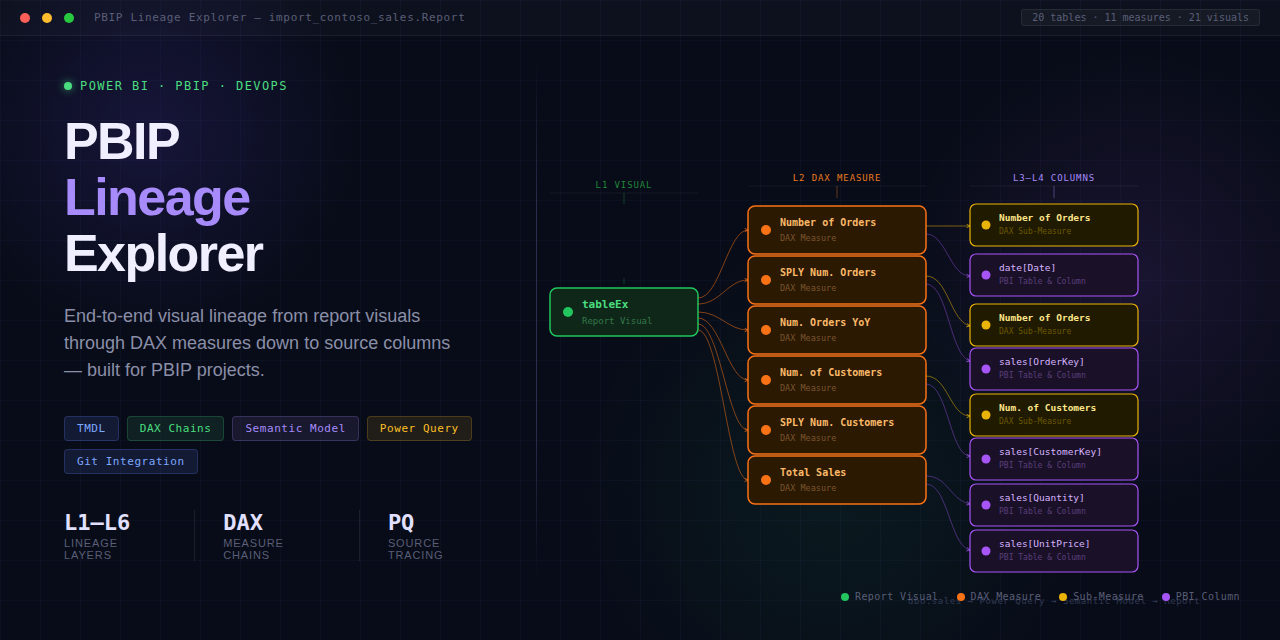
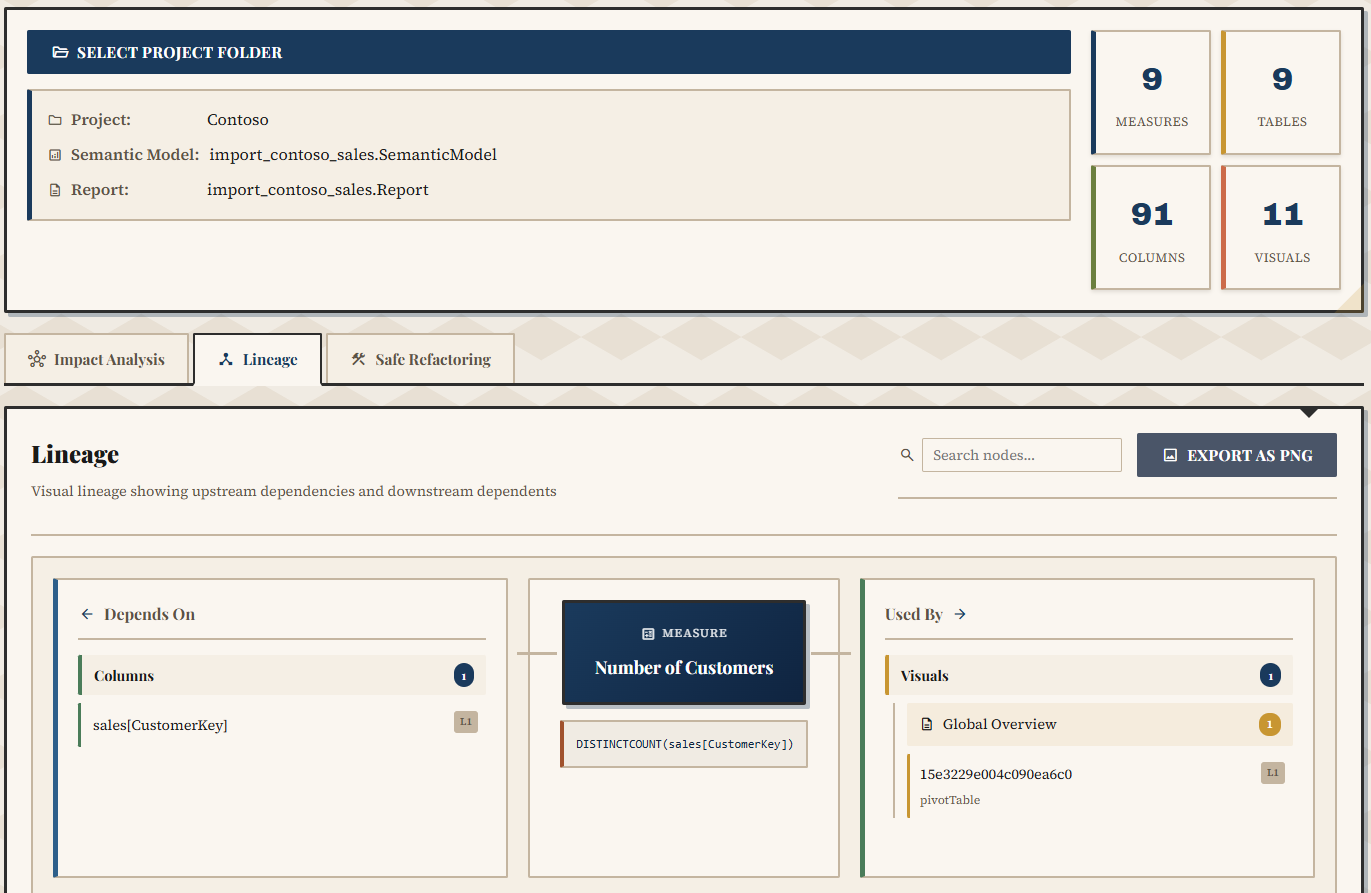
Traces DAX measure dependencies from visuals to source columns in PBIP projects. Includes commit-by-commit change intelligence across 30+ change types. Essential for teams adopting Git-based workflows.
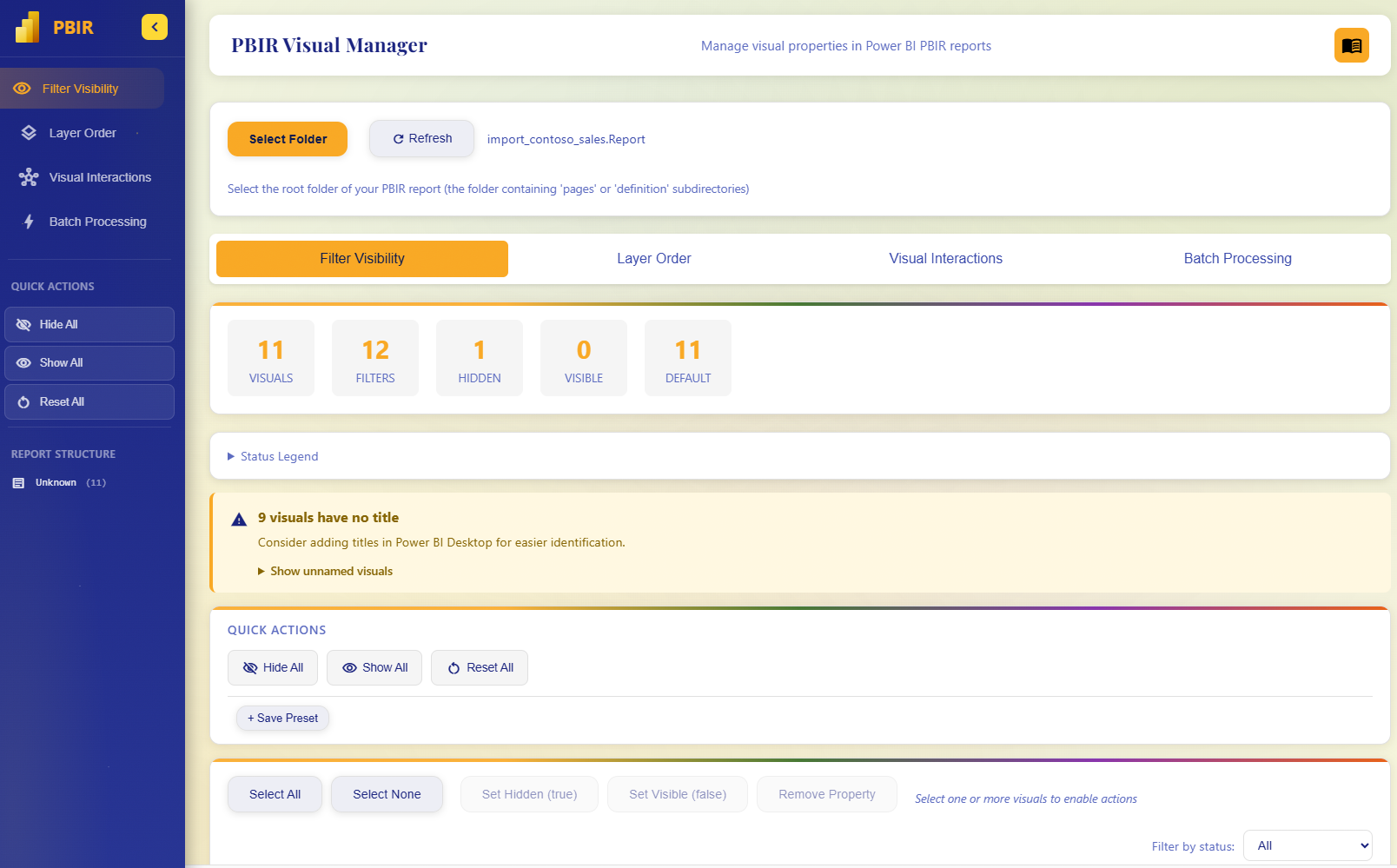
Bulk-manage filter visibility and layer order in PBIR reports. Eliminates tedious manual clicking through Edit Interactions. The first tool to enable bulk management of PBIR visual properties.
Analyze impact of changes and safely refactor PBIP semantic models. Know which visuals, measures, and reports are affected before you make the change. The safety net for enterprise refactoring.
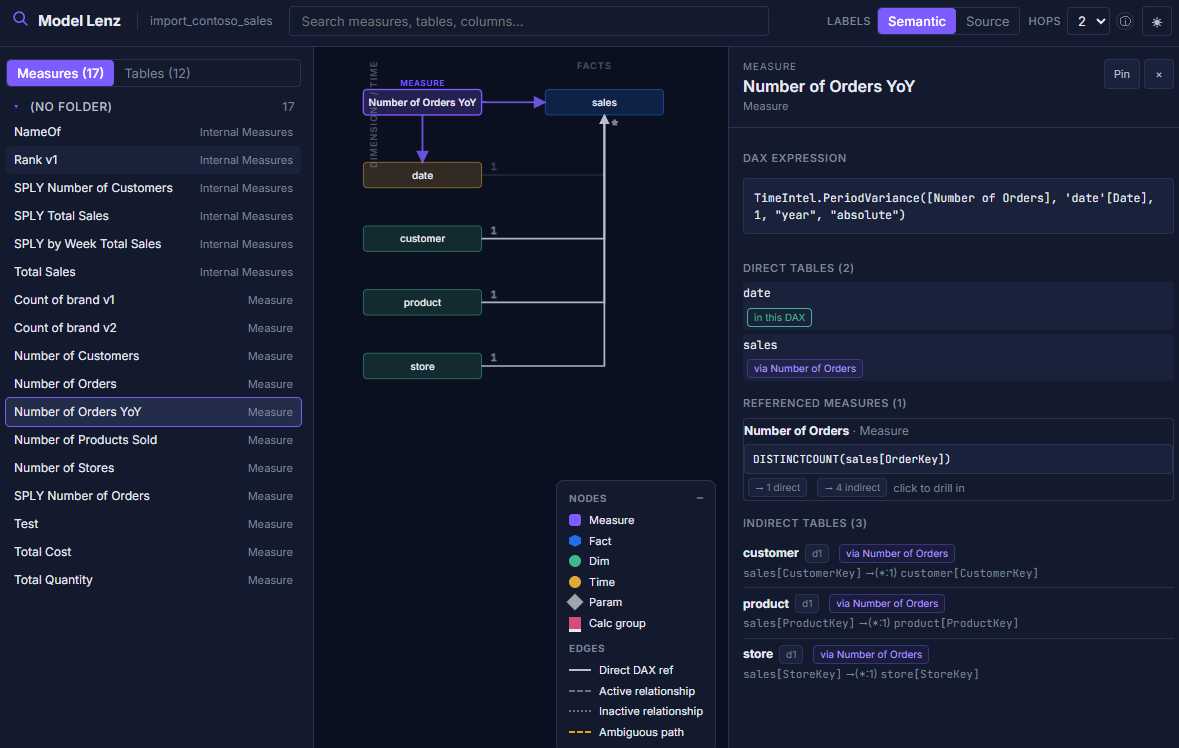
PBIP analyzer that bridges BI developers and data engineers, one graph, two readings. Click any measure to trace every table it depends on through direct references and active relationships. First Python tool in the suite, shipped on PyPI as pip install model-lenz.
I spent over ten years in supply chain and logistics operations before moving into BI. That background is why I design around the numbers operations teams actually act on, not just the model behind them.
Four areas I work in every day. The numbers are self-rated depth, grounded in the outcomes above.
Import, DirectQuery, Direct Lake, and composite models at billion-row scale. Physical & logical data modeling, role-playing dimensions, incremental refresh, aggregations, object-level security.
Git-based source control for Power BI artifacts, Azure DevOps / GitHub Actions pipelines, PBIP/TMDL workflows, automated documentation, impact analysis, and environment promotion.
Time intelligence, advanced calc groups, query plan analysis, VertiPaq tuning, DAX Studio, Tabular Editor scripting, UDFs, and calculation group design for enterprise semantic layers.
AI agents in every phase of development: Claude for DAX authoring, PBIR/TMDL editing, documentation, and performance diagnostics, and now the Power BI Desktop Bridge and Skills for Fabric agent skills, which I am learning and actively using so agents edit the files on disk and verify against the live Desktop session. Semantic models designed so Copilot and AI agents answer correctly. I test each new tool as it lands and coach the team on what works.
Active
Expired
Community Super User
ONGOING
Sharing knowledge through writing, mentoring, and open-source contributions.
Deep dives into Power BI, PBIR, DAX, Microsoft Fabric, and DevOps for BI. Discoveries, patterns, and techniques from real enterprise work.
Visit blog arrow_forwardAs a Microsoft MVP and Power BI & Fabric Super User, I actively contribute through mentoring, forum support, and knowledge sharing.
Find me across the Microsoft ecosystem:
PBIR goes GA this quarter. Fabric adoption keeps growing. And every Copilot rollout makes the same point: AI in analytics is only as good as the semantic model underneath it. Getting governance, DevOps, and semantic architecture right now is what makes AI answers dependable later.
My three objectives:
I am exploring Power BI and Microsoft Fabric architecture roles at leading global enterprises. Based in Amsterdam, with EU work rights, open to relocation and remote. If your team faces a Fabric migration, a PBIR transition, or wants semantic models that AI can answer from, let's talk.
Power BI / Fabric Architect · Fabric Platform Lead · Amsterdam · Global